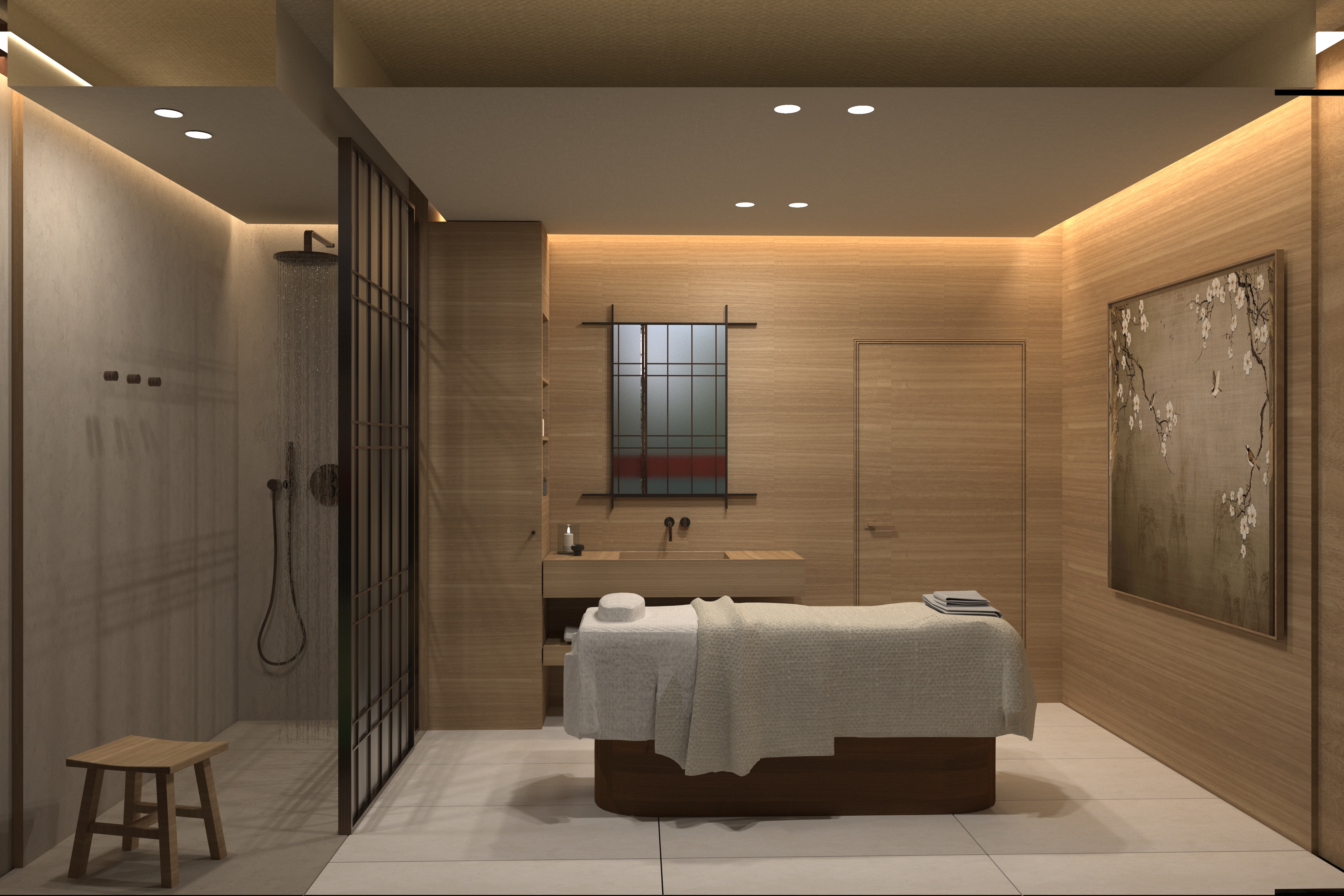
here s a prompt built to keep your geometry locked while pushing the render toward photoreal materials and lighting the not cg look usually comes from natural light behavior subtle imperfections and camera like optics rather than from changing shapes prompt photorealistic interior photography of a japanese style massage room exact same architectural layout and geometry as the reference image no changes to walls furniture placement or proportions same materials as reference wood tatami paper panels stone but rendered with physically accurate real world material response visible wood grain subtle surface imperfections soft specular highlights natural material roughness variation realistic soft natural daylight coming through shoji paper screens gentle diffused light with soft shadow falloff warm color temperature around 3200k mixed with cool daylight fill subtle light bounce and ambient occlusion in corners shot on a full frame dslr 35mm lens f 2 8 shallow depth of field slight film grain realistic exposure with gentle highlight rolloff no hdr clipping natural color grading like an architectural photography magazine avoid cgi look plastic material sheen flat lighting oversaturated colors unrealistic reflections render artifacts over sharpened edges a few notes on why these pieces matter same geometry materials as reference stops the model from redesigning the room critical if you re feeding it an existing render as an image to image input naming the light source physically shoji diffused daylight color temp bounce ao is what kills the cg light look more than any style keyword camera lens language 35mm f 2 8 grain exposure rolloff is doing the heavy lifting against the looks like a 3d render problem it s telling the model to simulate a photo not an illustration