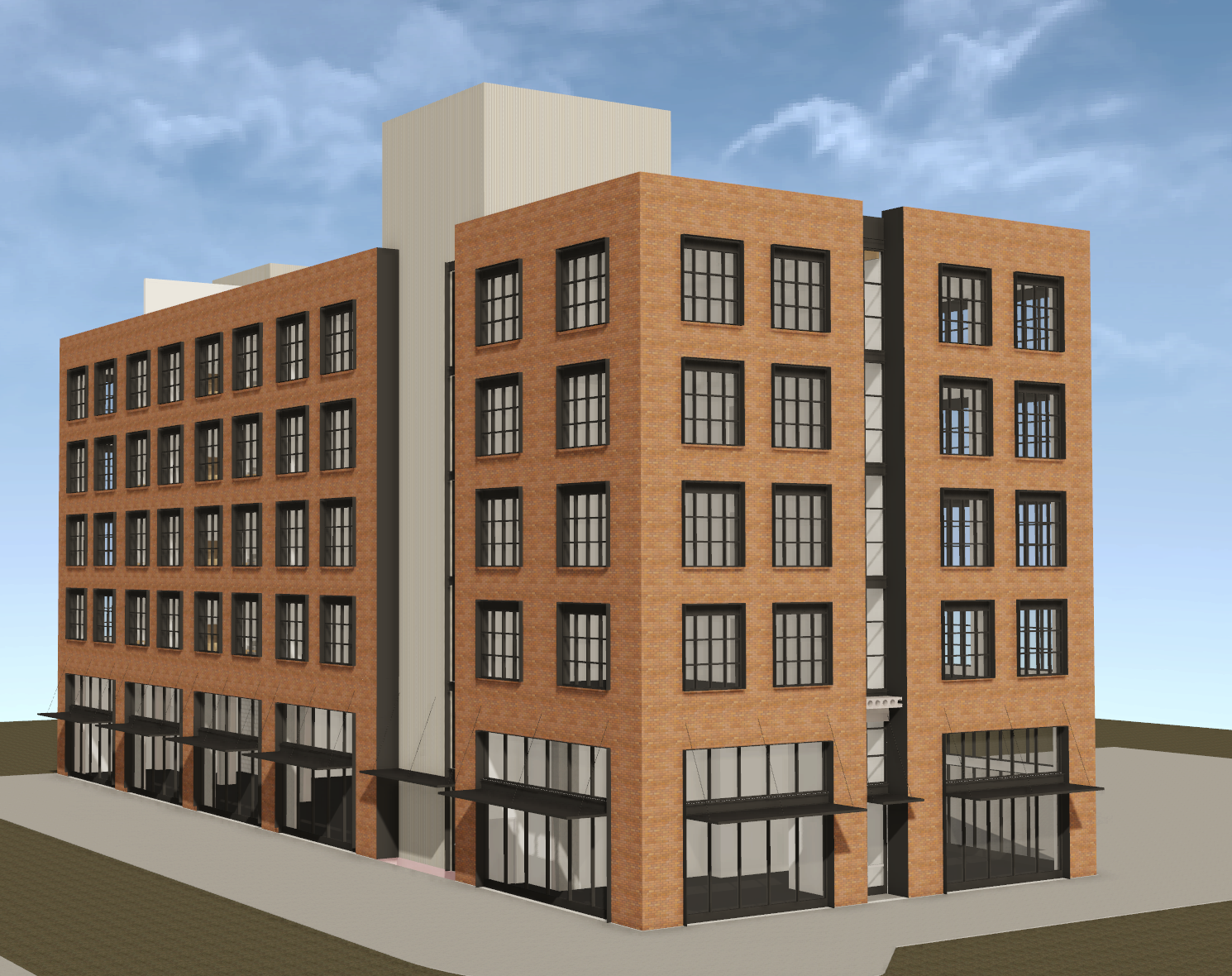
core premise the exterior architecture is driven by reduction the intent is not to add character but to remove unnecessary expression so the building reads as a coherent object rather than an assembly of parts form discipline preserve existing building volume and window grid no modulation of the fa ade through setbacks offsets or applied elements all variation is achieved through material texture and depth not geometry the building should read as one continuous figure not multiple fa ades stitched together primary wall assembly utilize a smooth panelized exterior system fiber cement eifs or equivalent panels sized and jointed to reinforce the existing window rhythm jointing strategy to be consistent and minimal no decorative scoring finish to be matte and uniform avoiding sheen or color variation key constraint the wall assembly must visually flatten the building rather than articulate it vertical circulation expression stair and elevator core expressed as a single vertical element cladding to be ribbed or corrugated metal panel with vertical orientation no horizontal breaks trim or transitions within this volume color to remain within the same tonal family as the primary fa ade this element should register as infrastructure not feature fenestration strategy all residential windows to match the ground floor three pane proportion no differentiation by unit type elevation or floor frames to be dark and minimal mullions aligned consistently across all elevations avoid secondary shading devices fins or exterior attachments intent windows are part of a system not individual moments ground floor interface ground level defined by transparency rather than material change storefront glazing to remain simple with minimal mullion depth canopies to be thin planar and continuous where required no change in fa ade logic between commercial and residential zones material hierarchy limit exterior materials to one primary wall surface one secondary metal system no tertiary materials no accent finishes no localized feature zones detailing priorities all details to resolve through repetition not customization minimize unique conditions at corners transitions and terminations favor standard profiles and assemblies over bespoke solutions envelope detailing should anticipate ve without altering intent design guardrails what this building should avoid brick patterning or articulation expressed floor lines window fins eyebrows or trim color blocking faux industrial elements applied branding through architecture design outcome the building should feel deliberate calm economical long lasting if executed correctly the architecture recedes slightly allowing proportion and consistency to do the work