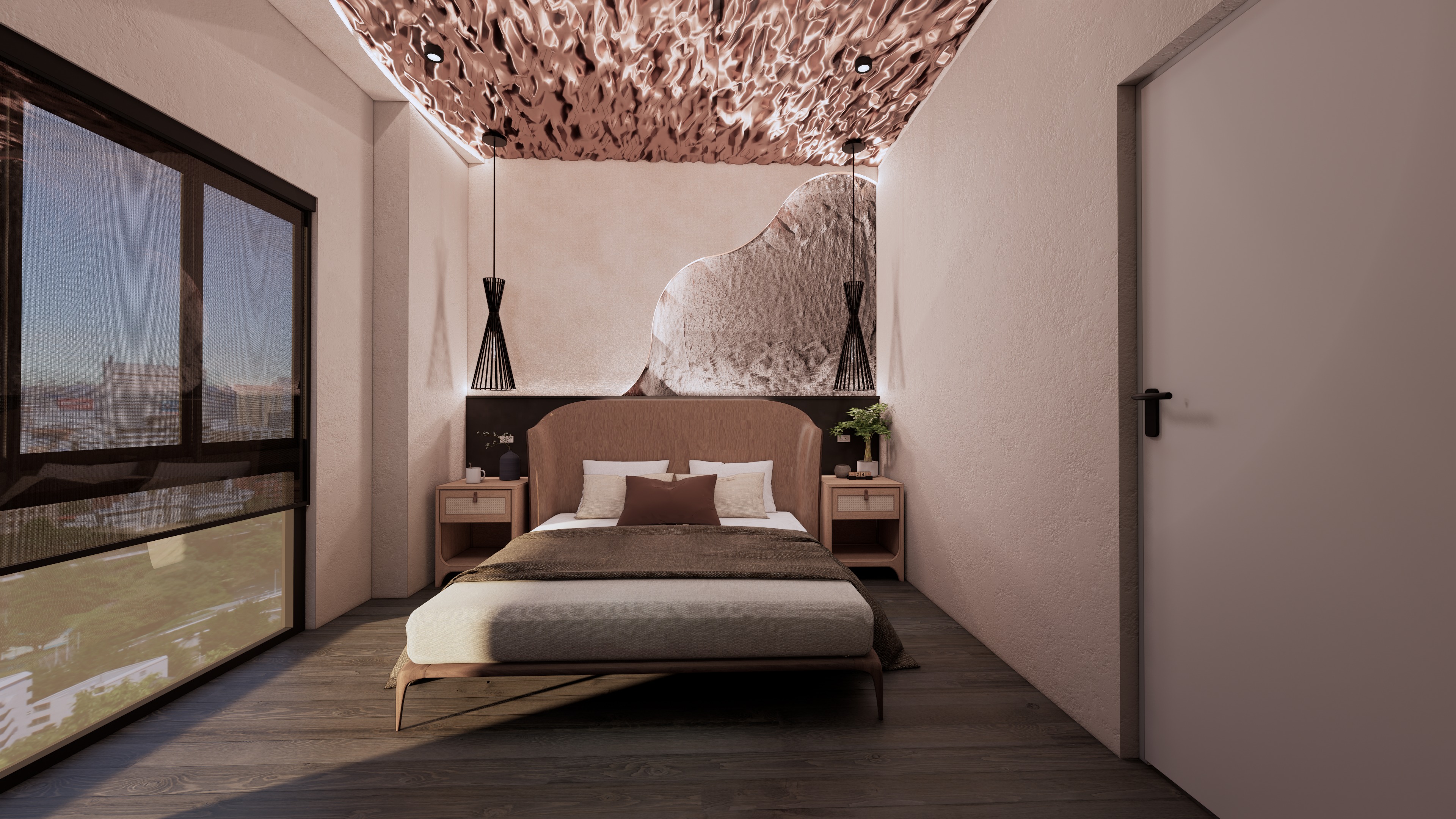
prompt photorealistic architectural render enhancement enhance the provided enscape architectural render into an exceptionally photorealistic high end architectural visualization that closely resembles a real life photograph taken by a professional architectural photographer core objective realism without redesign treat the provided image as the definitive visual reference preserve the original architectural design geometry proportions dimensions composition camera angle perspective framing furniture placement fixtures built in cabinetry decorative elements and all existing details exactly as they appear in the reference image do not redesign reinterpret add remove relocate or modify any architectural or interior design elements do not change the layout material design intent or overall aesthetic the task is strictly to enhance visual fidelity realism and image quality while maintaining the integrity of the original design 1 materials and textures refine all existing materials to achieve physically convincing photorealistic surface qualities wood enhance natural grain patterns subtle tonal variations realistic grain direction fine surface details and appropriate roughness avoid repetitive artificial or overly glossy textures stone marble and tiles improve surface definition natural veining subtle imperfections realistic reflectivity grout lines and fine texture variation maintain the original pattern scale and color concrete and plaster introduce subtle surface irregularities realistic matte finishes fine grain and natural tonal variation without making surfaces look dirty or excessively weathered painted surfaces refine smoothness reflectance subtle texture and light interaction to create believable painted walls ceilings and millwork glass improve transparency reflections refraction edge definition and realistic interaction with the surrounding environment while preserving the original glazing and transparency metal enhance physically accurate reflections subtle brushed or polished finishes realistic highlights and appropriate roughness according to the existing material fabric upholstery and soft furnishings introduce fine woven textures natural folds subtle fiber details and realistic light absorption other existing materials accurately reproduce their real world surface characteristics without changing their original appearance or intended finish ensure every material responds naturally to light with physically plausible roughness reflectivity specular highlights and surface depth avoid excessive bump mapping exaggerated textures artificial shine or an overly polished cgi appearance 2 lighting and global illumination improve the lighting to achieve natural physically plausible illumination throughout the scene refine global illumination indirect lighting ambient occlusion contact shadows bounce light and light falloff ensure that light interacts naturally with walls floors ceilings furniture and reflective surfaces preserve the original lighting direction time of day atmosphere and overall mood unless minor adjustments are necessary to improve realism enhance the balance between direct and indirect illumination creating soft yet defined shadows realistic light gradients natural highlights and convincing depth for natural daylight simulate believable sunlight and skylight with realistic color temperature exposure and shadow softness for artificial lighting improve the authenticity of existing downlights cove lighting pendant lights led strips and other visible fixtures avoid blown out highlights crushed shadows excessive ambient brightness unnatural color casts or flat and uniform illumination maintain detail in both bright and dark areas 3 reflections shadows and depth improve reflections and shadow behavior according to the physical properties of each surface create realistic reflections on glass polished stone glossy tiles mirrors metallic surfaces and other reflective materials reflections should be subtle accurate and consistent with the scene s geometry and lighting rather than appearing artificially sharp or uniformly glossy refine contact shadows beneath furniture along wall floor junctions around cabinetry and at points where objects meet other surfaces add subtle ambient occlusion to reinforce depth without creating excessive dark outlines or dirty looking corners improve the perception of spatial depth through realistic light scattering natural contrast subtle atmospheric depth where appropriate and accurate foreground to background definition 4 microdetails and real world imperfections introduce restrained physically plausible microdetails that make the scene feel real rather than computer generated enhance fine surface grain subtle edge highlights realistic material transitions slight variations in roughness natural fabric folds believable object contact and delicate imperfections inherent to real world materials maintain clean well executed architectural detailing do not introduce dirt scratches stains damage excessive wear or random imperfections unless they are already present in the reference the result should feel refined realistic and professionally photographed not artificially aged or excessively textured 5 color accuracy and photographic quality improve the image using professional architectural photography principles refine exposure white balance tonal range contrast color accuracy highlight recovery shadow detail and local contrast maintain the original color palette and material colors while correcting unnatural saturation flat tonal transitions and overly digital looking colors use natural color grading realistic dynamic range clean highlights detailed shadows and balanced midtones preserve the original design atmosphere and visual hierarchy apply subtle photographic sharpness and fine detail enhancement without introducing halos oversharpening excessive clarity artificial depth of field or aggressive hdr effects 6 architectural integrity and detail preservation this is an architectural visualization enhancement task not a redesign preserve every visible architectural feature including wall positions openings ceiling heights beams columns moldings joints reveals cabinetry profiles furniture silhouettes decorative objects fixtures and all existing design details maintain the exact original camera position lens perspective vertical alignment image crop aspect ratio and composition do not widen or narrow the space alter proportions distort geometry or invent details outside the visible reference do not add new furniture accessories plants windows doors lighting fixtures or architectural features do not remove existing elements or replace original materials with different finishes final output produce an ultra photorealistic high resolution architectural image that looks like a real photograph of the exact same built environment the final result should feature physically believable materials realistic surface textures natural lighting accurate reflections refined shadows convincing depth balanced exposure and professional photographic quality priority order 1 preserve the original architecture and all existing details 2 improve material authenticity and texture quality 3 refine lighting global illumination reflections and shadows 4 enhance depth color accuracy and photographic realism 5 deliver a clean premium natural looking photorealistic result strict negative constraints no redesign no geometry changes no layout modifications no camera changes no altered furniture no invented objects no missing details no material substitutions no exaggerated reflections no artificial gloss no oversaturated colors no excessive contrast no cartoon like appearance no painterly effects no stylization and no visible ai generated artifacts the final image must remain faithful to the reference in every design related aspect with improvements concentrated entirely on realism material quality lighting and photographic fidelity