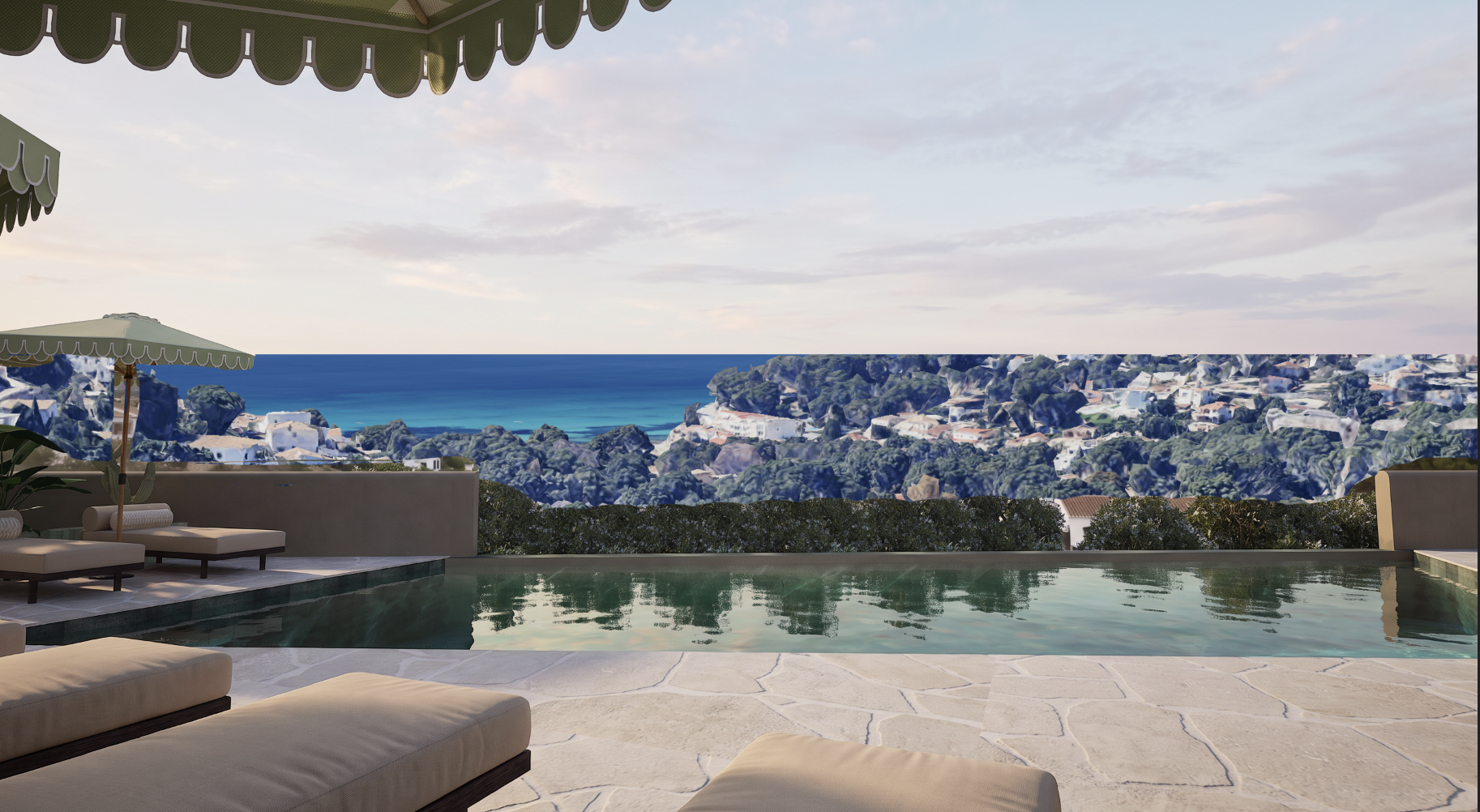
4 critical match the background colour gradient atmosphere haze this is one of the most important requirements for the final image the inserted valley hills houses sea and sky currently originate from separate imagery and may have a different colour gradient tonal response atmospheric haze contrast falloff and depth rendering than the original photograph do not simply blend the edges the entire inserted background must be re rendered and colour integrated so that it follows the exact same photographic atmosphere as the original image the background must visually inherit the same overall colour temperature white balance exposure brightness gradient contrast gradient saturation gradient atmospheric colour haze density haze colour shadow density highlight behaviour black point level midtone brightness distant tonal compression lens rendering dynamic range photographic grain overall colour grading the result must have one continuous atmospheric envelope across the entire image continuous colour gradient absolutely critical the colour of the background must not remain uniform from foreground to horizon create a realistic continuous photographic gradient from foreground architecture balcony nearby vegetation valley distant hills sea horizon sky the tonal and colour transition must happen gradually and naturally with distance nearby landscape should retain more colour contrast detail local tonal variation natural vegetation richness as the landscape becomes more distant gradually introduce lower contrast slightly reduced saturation softer detail lighter tonal values subtle atmospheric colour influence progressively greater atmospheric haze this gradient must be continuous and extremely subtle there must be no abrupt point where the inserted background suddenly changes colour contrast or exposure atmospheric haze must match the original image analyze the atmospheric conditions visible in the original photograph and reproduce the same type density and colour of haze throughout the inserted landscape the haze should behave according to physical distance use a layered atmospheric perspective rather than applying one uniform haze effect over the entire background near distance vegetation and terrain closest to the balcony should remain relatively clear and detailed only a very subtle atmospheric veil should be present mid distance the valley and intermediate hills should gradually become softer slightly lighter slightly less saturated lower in contrast subtly influenced by the surrounding atmospheric colour far distance the furthest hills and sea should have noticeably softer contrast slightly reduced saturation delicate atmospheric veil subtle blue green atmospheric influence softer microdetail naturally compressed tonal range the transition between these distances must be continuous with no visible bands no uniform haze overlay do not apply the same haze level to the entire background do not create a flat grey veil uniform white haze fog milky background washed out landscape artificial atmospheric overlay the atmosphere must increase naturally with distance from the camera the foreground should remain crisp enough to feel photographic while the distant landscape gradually recedes into atmospheric perspective match the original sky to land gradient the relationship between the sky horizon and landscape must be rebuilt so that the background has the same natural tonal transition as the original photograph the horizon must not look like a hard compositing boundary create a subtle continuous gradient between distant hills atmospheric horizon sea sky the sky should influence the distant landscape naturally through atmospheric scattering the distant hills should subtly inherit the colour of the surrounding sky and atmosphere the sea should also naturally reflect the same atmospheric conditions do not make the sea a separately graded blue green layer sea atmospheric integration the sea must be treated as a distant atmospheric element not as a pasted photograph its colour contrast saturation brightness atmospheric softness horizon transition reflections tonal range must correspond to the same atmosphere as the valley and sky the sea should naturally become slightly softer and lower contrast with distance avoid saturated blue sea cyan sea overly dark sea unnaturally sharp sea hdr sea artificially high contrast obvious stock photo appearance the sea must visually belong to the same weather conditions and photographic exposure as the villa valley gradual depth transition the valley must not have one uniform level of sharpness or saturation create a natural progression balcony foreground nearby planting valley floor middle hills distant hills horizon each successive layer should become subtly softer lower contrast slightly less saturated lighter through atmospheric scattering more influenced by the sky colour do not create obvious separate layers the valley must read as one continuous physical landscape viewed through real atmospheric depth colour grading one photographic response the inserted background must undergo the same global photographic colour response as the original image do not independently colour grade the valley sea or sky instead make the entire image appear to have been captured by the same camera sensor same lens same exposure and same colour processing pipeline the background and foreground must share the same warm cool balance highlight colour shadow colour midtone response saturation behaviour contrast curve dynamic range black levels highlight rolloff subtle photographic grain there must be no separate colour grade visible anywhere in the background no colour or tonal seams pay special attention to the exact areas where the inserted background meets the original image there must be no vertical colour shifts horizontal colour bands sudden changes in brightness sudden changes in saturation different haze levels different white balance different contrast visible exposure transitions halo like atmospheric boundaries sharp tonal borders rectangular colour zones the transition must be gradual organic and physically believable if necessary subtly reconstruct the pixels surrounding the transition so the atmospheric gradient continues naturally across the entire image match the original image s existing atmosphere do not invent a new one the original photograph is the absolute reference for the atmospheric character do not introduce a new dramatic atmosphere simply because the background image contains one if the original image has soft haze use soft haze warm evening atmosphere reproduce that atmosphere muted colours keep the background muted gentle contrast keep the background gentle subtle blue green distance reproduce that exact character the background must be adapted to the original photograph not the other way around final atmospheric test when viewed at normal image size the viewer should perceive one continuous atmosphere extending from the interior and architecture all the way into the distant valley hills sea and sky there must be no visual sensation of foreground photograph background photograph pasted landscape photoshop composite separate colour grades separate weather conditions separate cameras separate exposures the background should feel as though it was physically present behind the villa when the original photograph was taken absolute requirement do not merely blend the background into the foreground reconstruct the atmospheric tonal and colour relationships so the entire image shares one continuous photographic gradient the final result must have one colour gradient one atmospheric gradient one haze system one exposure one white balance one lighting condition one camera one photograph