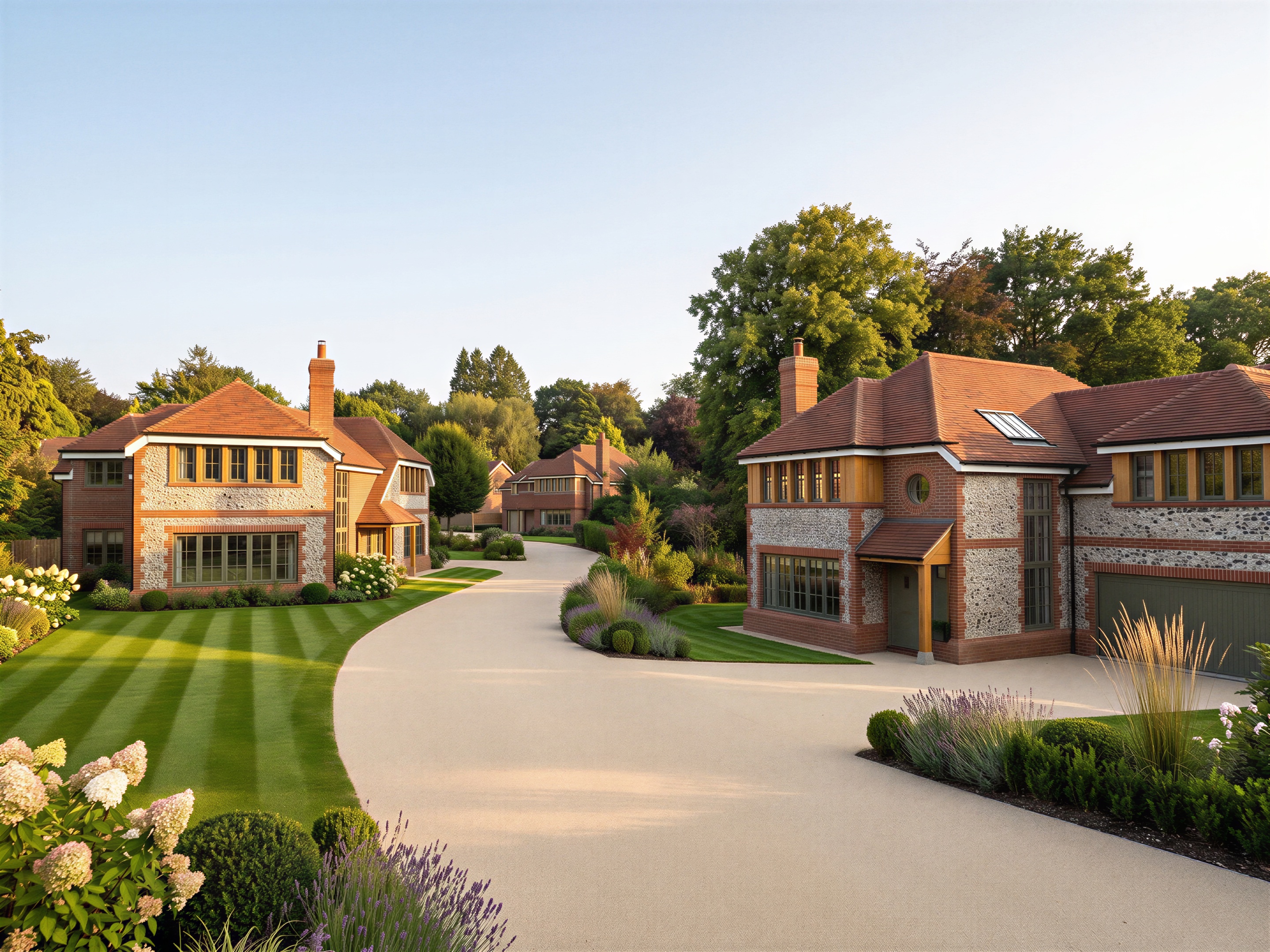
transform the supplied architectural image into a sophisticated hand painted architectural watercolour illustration preserve the architecture proportions geometry roof forms windows openings materials and viewpoint of the original image accurately do not redesign simplify or alter the building render the architecture using a combination of fine architectural ink drawing delicate pencil construction lines and expressive transparent watercolour washes maintain enough crisp linework around windows masonry roof edges and architectural details for the building to remain precise and believable while allowing the watercolour to become increasingly loose fluid and expressive around planting sky foreground and peripheral areas use layered translucent washes with visible pigment variation blooms soft bleeding edges granulation and occasional dry brush marks allow colours to overlap naturally rather than remaining perfectly contained within outlines introduce occasional areas of untouched white paper to create luminosity and contrast use a sophisticated natural palette warm terracotta and burnt sienna for brick and clay tiles soft ochre raw umber and warm stone tones muted sage olive and deep blue green vegetation dusty lavender and restrained floral accents and atmospheric washes of pale cerulean ultramarine and soft grey blue give the illustration a sense of sunlight and atmosphere with warm light catching selected elevations and roof planes while cooler blue grey and violet washes describe shadow shadows should feel transparent and painterly rather than digitally rendered vegetation should be expressive and impressionistic rather than botanically detailed created from overlapping washes loose brush marks darker ink branches and occasional concentrated areas of pigment trees may partially dissolve into the surrounding white paper and sky the sky should be painted loosely using large translucent blue grey watercolour washes with soft wet on wet edges irregular pigment blooms and generous areas of white paper rather than a uniform digital gradient foreground landscaping and hard surfaces should gradually become looser toward the edges of the composition with broken washes unfinished marks pigment splashes and fading linework avoid filling every part of the image retain subtle evidence of the drawing process fine ink outlines occasional pencil marks broken contours small irregularities and selective sketch lines but keep these restrained the finished image should feel primarily like an accomplished architectural watercolour rather than a technical sketch overall aesthetic elegant contemporary architectural watercolour by a highly skilled architectural illustrator atmospheric luminous sophisticated and confidently hand painted precise architecture combined with expressive painterly surroundings more editorial architectural illustration than property development cgi avoid photorealism cgi textures perfect digital gradients excessively sharp landscaping cartoon effects heavy black outlines excessive construction lines sepia vintage effects overly sugary colours generic property marketing imagery or sentimental cottage watercolour styling