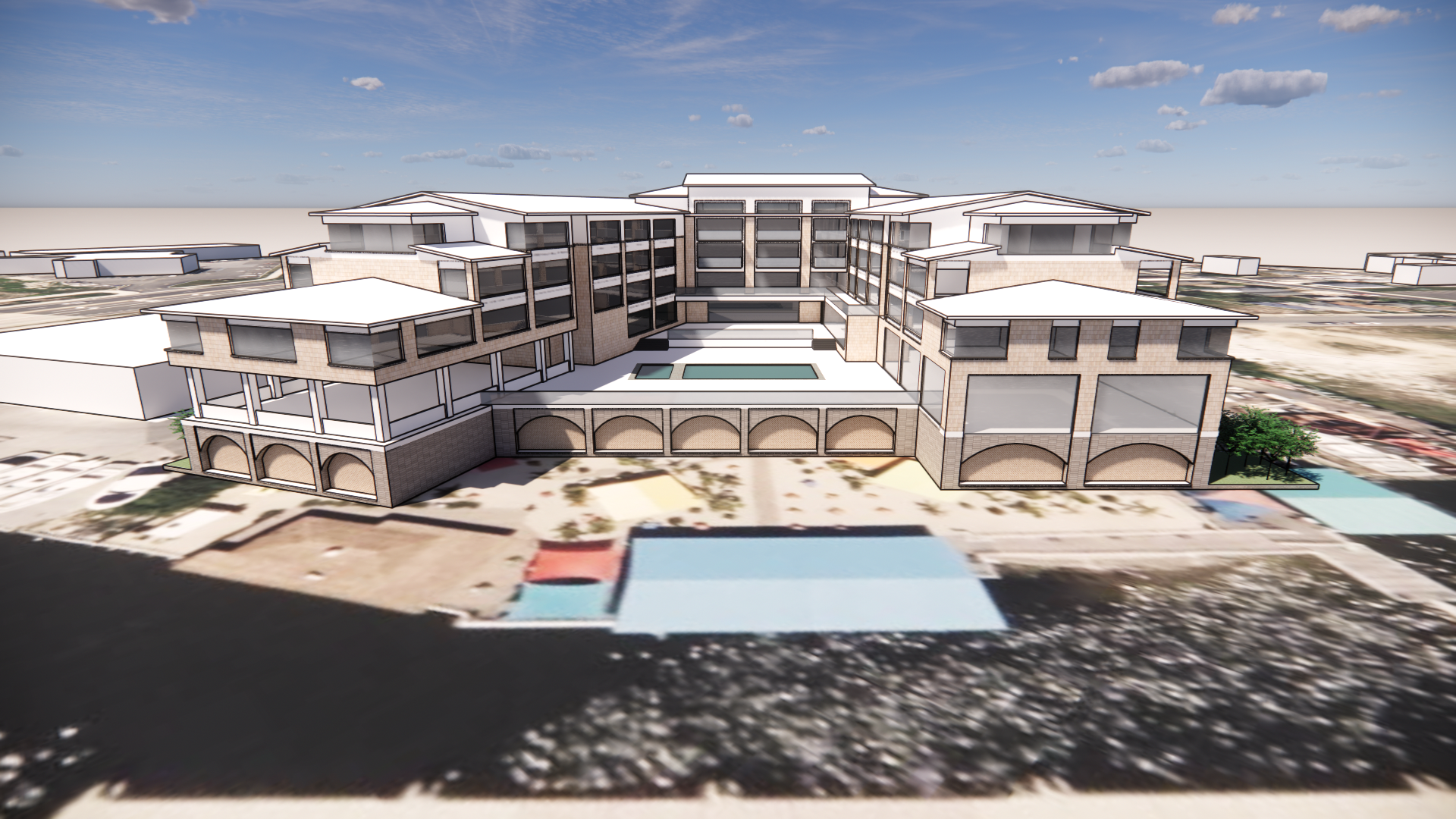
use the provided drone photograph as the primary environmental and contextual base precisely align the input architectural model to match the perspective scale and camera position of the drone image seamlessly composite the proposed building into the scene ensuring correct positioning relative to surrounding site features topography and adjacent structures maintain strict fidelity to the input model s geometry proportions and massing do not alter or reinterpret architectural forms match lighting conditions from the drone image including sun angle shadow direction intensity and atmospheric haze ensure consistent color temperature and exposure between the inserted architecture and the existing photo reconstruct and extend site elements as needed to blend the building naturally into the image including ground plane landscaping vegetation streets and neighboring context preserve realistic edge conditions where new elements meet the original photo apply materiality consistent with the design intent while matching the tonal range and texture realism of the drone photograph avoid overly stylized or exaggerated rendering effects ensure seamless blending at all transition points no visible cut lines mismatched resolution or lighting inconsistencies output should feel like a naturally captured aerial photograph with the proposed architecture fully integrated into the real world context