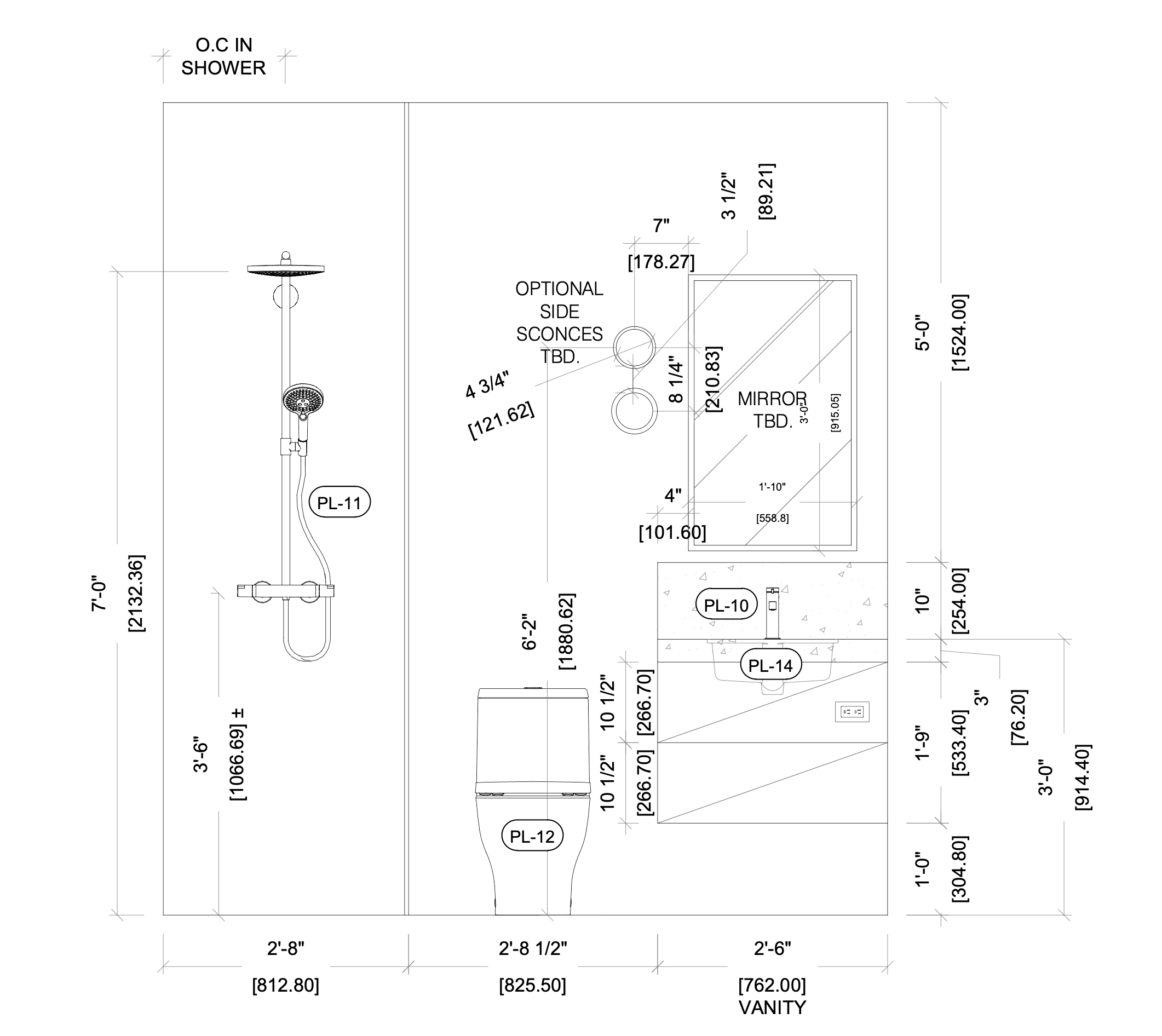
create a photorealistic interior rendering based precisely on the attached bathroom elevation drawing maintain the dimensions proportions fixture locations vanity size mirror placement and overall layout shown in the architectural drawing use the attached mood board as the visual reference for the material palette colour temperature and overall design aesthetic the finished space should feel warm quiet refined and contemporary with a soft warm minimal japandi influence render the 30 wide floating vanity in a smooth warm greige painted finish with two large handleless drawers and clean minimal reveals the vanity should appear genuinely wall mounted with open space below use a white porcelain countertop with a clean minimal edge profile and an integrated undermount white basin faucet and plumbing fixtures to be brushed nickel matching the reference imagery understated satin rather than shiny chrome above the vanity install the vertical mirror according to the proportions and location shown on the elevation keep the mirror simple and frameless minimal add the two small spherical globe wall sconces vertically beside the mirror as shown on the drawing they should emit a soft warm diffused glow and feel sculptural but very minimal walls should be a soft warm off white pale greige similar to the mood board with subtle tonal variation rather than stark white keep the palette restrained and sophisticated include the toilet and shower fixtures exactly where indicated in the architectural elevation shower fixtures should be brushed nickel lighting should feel like soft natural daylight combined with warm ambient sconce lighting with realistic shadows and gentle material texture avoid harsh overhead lighting cool grey tones excessive styling decorative clutter or a glossy luxury hotel appearance overall feeling warm architectural minimalism tactile neutrals understated european detailing soft natural light calm and elevated important do not redesign the bathroom or change the architectural layout use the elevation for geometry and placement and use the mood board only to establish finishes materials lighting and atmosphere