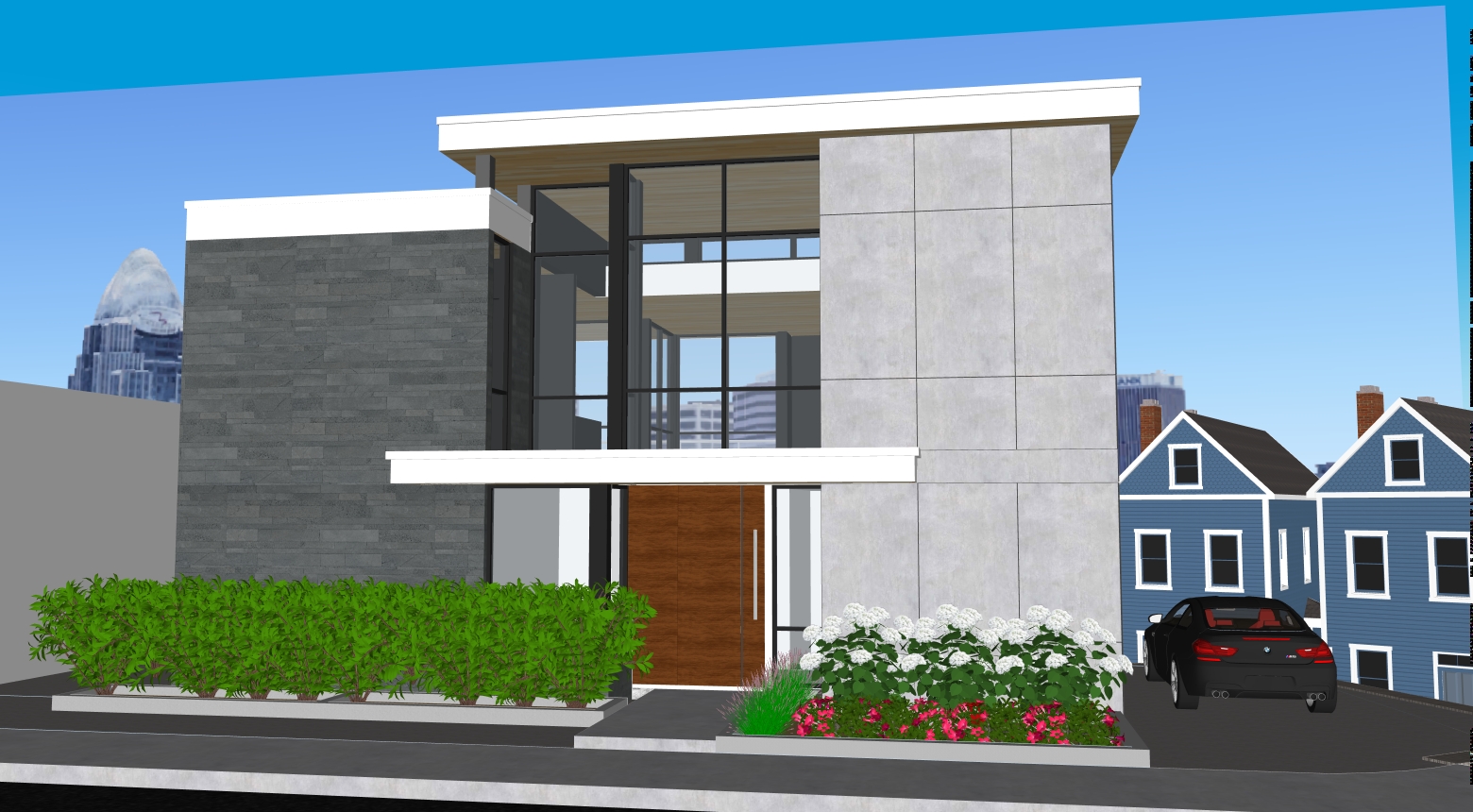
dark linear stone color consistency is critical the existing dark linear stone cladding must remain highly uniform in overall color preserve the exact dark stone color shown in the input image there may be extremely subtle natural tonal variation between individual stone planks but the variation must be barely perceptible the stone should read visually as one consistent dark charcoal gray architectural material not as a collection of individually colored stones strictly avoid light colored individual planks medium gray planks mixed throughout large tonal differences between adjacent planks noticeable color blotching strong random color variation bright highlights that make individual planks appear lighter exaggerated natural stone coloration high contrast mottling dramatic changes in saturation warm cool color shifts between planks maximum color variation should be extremely restrained approximately 95 of the stone should visually remain within the same narrow dark color range individual planks may have only the slightest tonal difference from one another just enough to prevent the surface from looking artificially flat the linear pattern spacing scale texture and color of the existing stone must remain unchanged do not reinterpret the stone as natural rough masonry it should look like a refined dark uniform architectural stone cladding system with extremely subtle tonal variation lighting interaction with stone do not use lighting that creates artificial looking bright and dark planks keep illumination across the stone relatively even and natural avoid strong raking light excessive specular highlights exaggerated ambient occlusion or deep shadows between individual planks that could make some pieces appear significantly lighter or darker the stone s base color should remain dominant over lighting variation important the stone should look like one dark uniform material first with only microscopic subtle natural variation second do not enhance or improve the stone texture or color variation