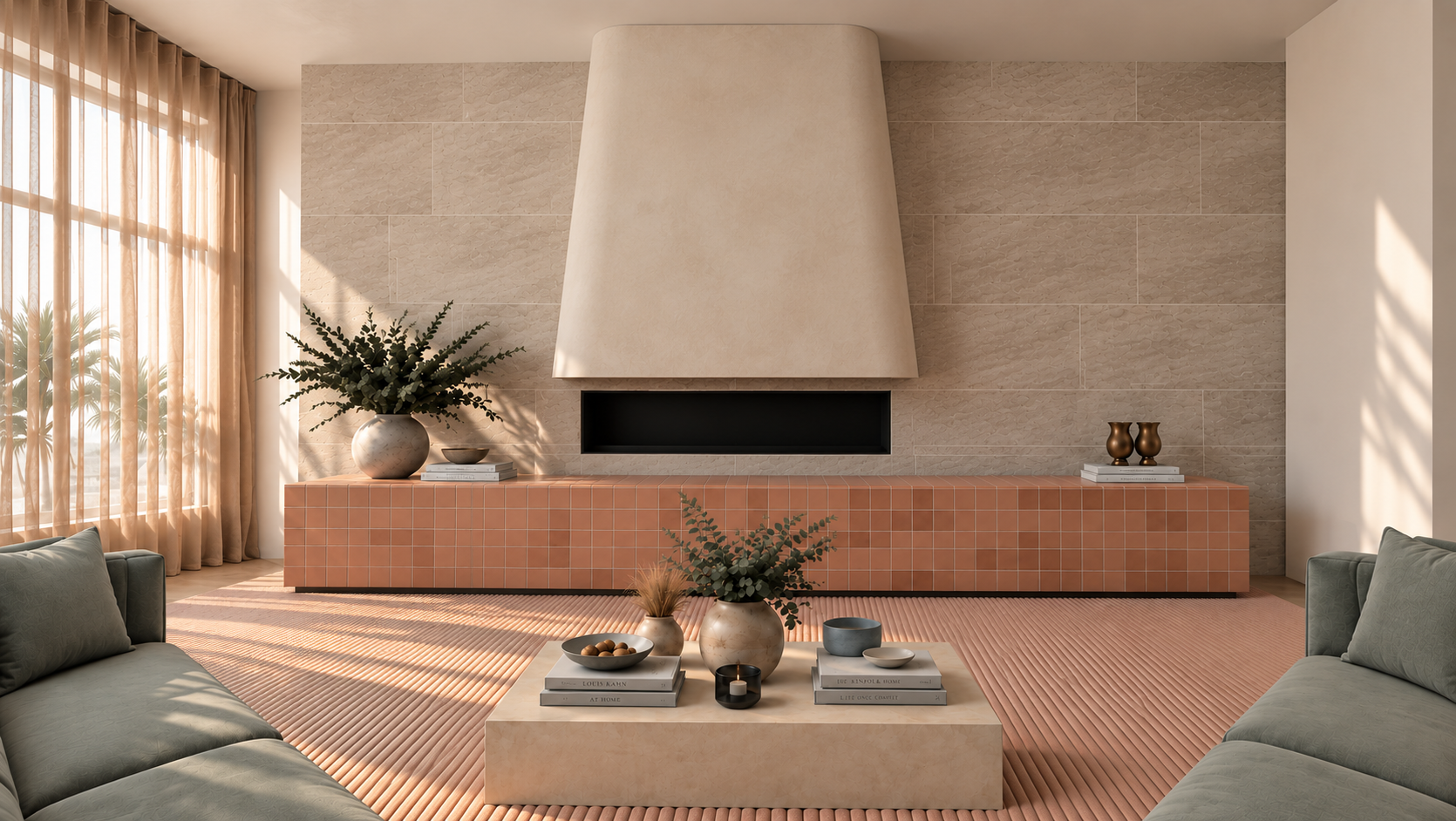
create several alternate color and material schemes for the attached living room rendering using the attached inspiration images as the primary reference for the overall palette mood and material relationships the goal is to explore a more sophisticated layered color palette inspired by the references particularly their combinations of teal blue green walnut muted greens chartreuse warm earthy accents and rich natural materials the room should feel curated warm contemporary and residential rather than overly neutral or monochromatic elements that must remain unchanged preserve the exact architecture room dimensions conversation pit layout camera position perspective furniture placement window locations and overall spatial design of the original rendering do not change the color material shape or design of the teal blue sofa the coffee table the roman clay chimney fireplace the existing black fireplace opening these elements are fixed and should act as anchors for the new palettes color direction take strong inspiration from the attached reference interiors build each palette around the existing muted teal blue sofa and warm off white beige chimney explore colors such as deep teal petrol blue dusty blue muted aqua forest green olive green chartreuse burgundy muted terracotta dusty rose plum warm cream tobacco brown and rich walnut where appropriate do not use yellow the client specifically dislikes yellow chartreuse is acceptable when it reads as a sophisticated green chartreuse rather than mustard or yellow green avoid golden yellow mustard butter yellow ochre or other obviously yellow tones do not simply make everything teal to match the sofa the references work because they combine related colors with contrasting earthy and natural materials so create depth through thoughtful contrast walnut wood walnut should be the only wood species color used anywhere in the room do not introduce oak ash maple blonde wood orange wood or other wood tones look for tasteful opportunities to repeat walnut elsewhere in the design in small amounts for example architectural details trim console components accessories or other subtle details so that the walnut feels intentionally integrated throughout the room do not overuse it the room should still feel balanced and colorful custom console redesign the long console as one of the main material moments in each option keep its existing overall dimensions position and long horizontal proportions but explore combinations such as ceramic tile walnut marble stone walnut colored lacquer walnut the console should feel custom designed and architectural not like a generic piece of furniture explore interesting but refined ways of dividing the materials across the long rectangular form for example walnut cabinetry combined with tiled end sections a stone top with walnut fronts lacquered sections framed by walnut or other sophisticated compositions ceramic tile can introduce colors such as deep teal blue green burgundy muted terracotta dusty rose or other tones derived from the inspiration images marble can introduce subtle movement and additional color but avoid overly busy or flashy stone rug the rug should continue to fill the conversation pit area and maintain the existing custom fitted dimensions prioritize a single solid color with a luxurious tactile wool texture and subtle natural tonal variation do not introduce a conventional decorative pattern if using more than one color keep the treatment extremely restrained and sophisticated for example a subtle tonal border understated color blocking or very gentle tonal variation it should still read primarily as a solid rug rather than a patterned rug explore rug colors that complement rather than simply match the teal sofa such as deep teal muted blue green dusty rose burgundy plum muted terracotta forest green restrained chartreuse or other sophisticated colors derived from the references walls smaller design details the wall materials and colors may change provided the architecture and wall geometry remain exactly the same explore subtle textures painted surfaces natural stone roman clay plaster or other refined finishes that support each palette smaller decorative details and accessories may also change color material to reinforce each scheme keep styling restrained and high end rather than filling the room with unnecessary d cor create multiple distinct options produce at least 4 clearly different palette options rather than minor variations of the same scheme for example explore directions such as option 1 teal walnut deep tonal teal blue green rug rich walnut dark teal ceramic tile warm neutral architectural finishes option 2 chartreuse walnut restrained green chartreuse rug or accents paired with teal blue upholstery walnut and a sophisticated complementary stone or ceramic tile keep the chartreuse distinctly green and avoid anything that reads yellow option 3 burgundy terracotta walnut a muted burgundy dusty rose or earthy terracotta rug paired with walnut and complementary tile lacquer or marble creating a warmer contrast against the teal sofa option 4 layered blue green walnut combine petrol blue muted aqua forest deep green and walnut in different proportions inspired by the tonal layering of the reference images without making the entire room one color feel free to create additional combinations if another palette derived from the inspiration images works particularly well each option should feel intentionally different in its rug color console material combination wall treatment and accent colors while retaining the exact same room design photorealism render every option as a high end photorealistic architectural interior photograph preserve realistic daylight shadows material scale reflections fabric texture walnut grain stone veining ceramic glaze rug fibers and subtle surface imperfections do not redesign the room do not change the architecture or furniture layout do not change the teal sofa coffee table or roman clay chimney fireplace the exercise is specifically about exploring new color palettes materials and smaller design details within the existing design