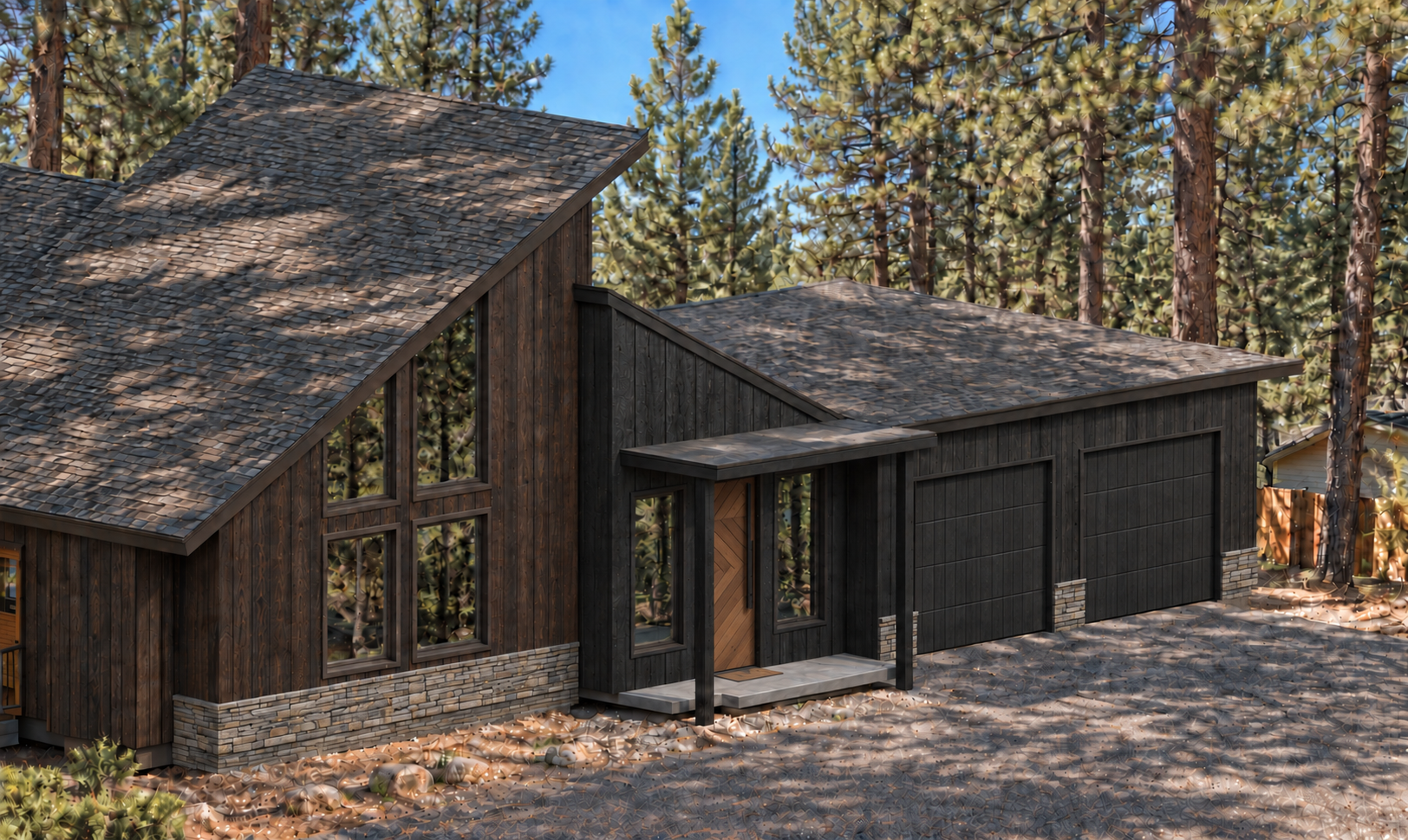
enhance the attached architectural rendering to look like a professional photograph of the completed space use the original image as the controlling reference improve photorealism only preserve all geometry material selections and design details exactly as shown do not move resize reshape replace add or remove any architectural elements furnishings fixtures or landscaping preserve all dimensions proportions roof forms walls ceilings openings windows doors cabinetry and structural details maintain the exact camera position perspective viewing angle framing and composition keep every existing material in its original location with the same color finish pattern scale and orientation improve its realism through accurate surface texture subtle natural variation fine detail roughness reflections and depth do not substitute materials or alter the design palette maintain existing seams joints and panel layouts make all visible elements more lifelike including vegetation glass metal wood stone fabric roofing and ground surfaces correct blurry warped repetitive or artificial looking textures without changing the underlying objects or their shapes give glass believable transparency and reflections without inventing openings or visible spaces preserve the existing lighting direction time of day exposure and overall mood refine natural light behavior soft shadows contact shadows and reflected light to create believable depth avoid dramatic relighting excessive contrast oversaturation heavy sharpening artificial gloss or stylized effects the final image should depict the exact same design materials and view with the realism of an actual architectural photograph if an enhancement would require changing geometry or material selection preserve the original instead