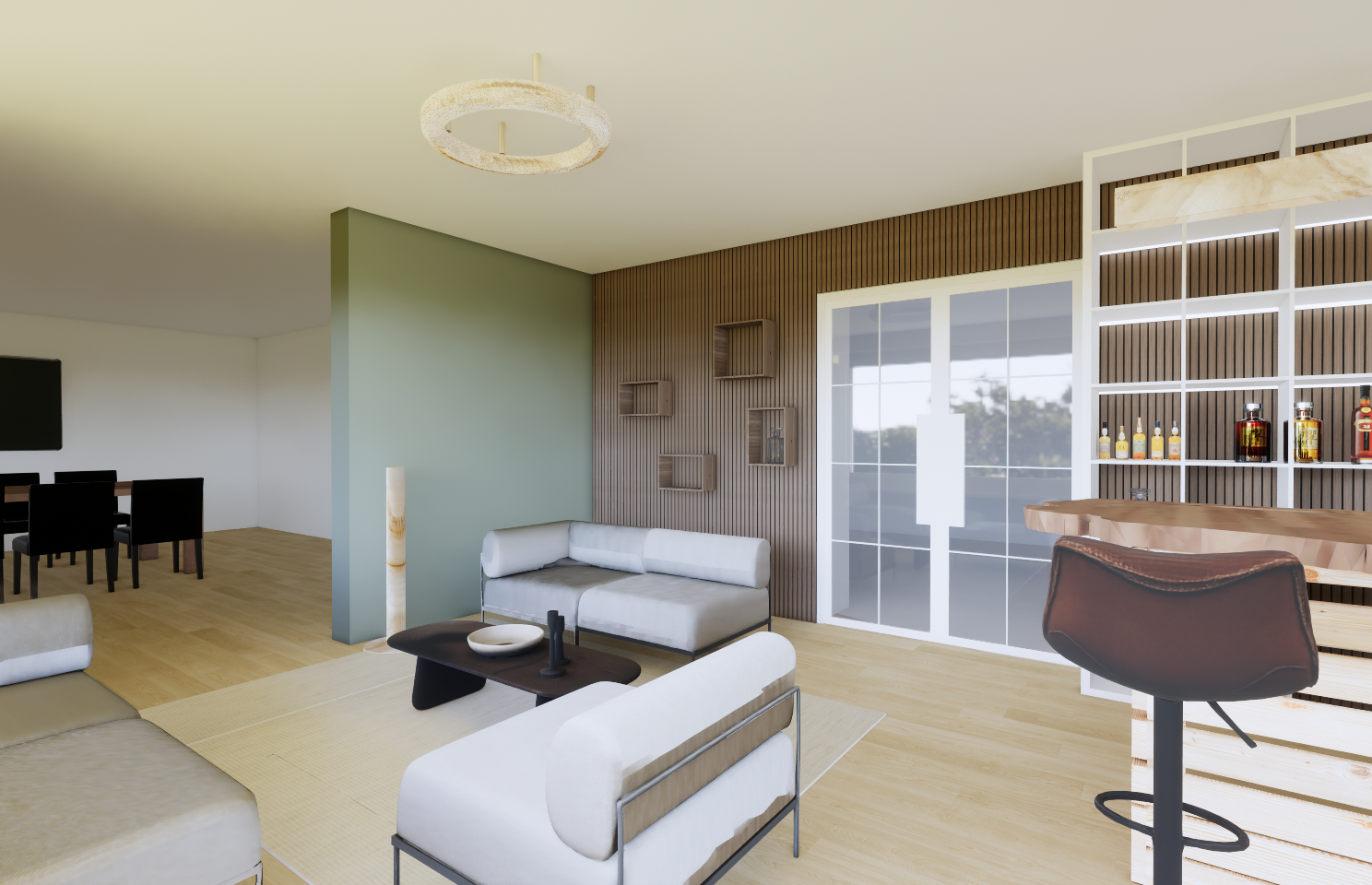
use the existing rendering as the base image do not change the layout geometry proportions or materials refine the image to achieve maximum photorealism making it indistinguishable from a professional interior photograph material handling important keep all existing materials exactly as they are same material type color finish and placement do not replace redesign or reinterpret any materials improve realism only through texture depth surface behavior and light interaction surface realism enhance texture resolution and material depth so surfaces feel real not flat add subtle imperfections micro variations slight roughness natural irregularities avoid perfect edges overly clean surfaces or artificial smoothness lighting refinement keep the existing lighting setup and positions improve lighting realism natural light falloff believable shadow softness correct contrast and realistic light bounce avoid overexposure flat illumination or stylized lighting effects global illumination apply physically accurate global illumination ensure light interacts naturally with all surfaces creating depth and spatial realism camera image behavior natural eye level perspective realistic focal length and scale very subtle depth of field almost imperceptible natural exposure and white balance no hdr look overall impression calm high end believable lived in but not staged no people no props no decorative additions the final image should look like a real interior photograph suitable for professional interior design marketing and portfolio use