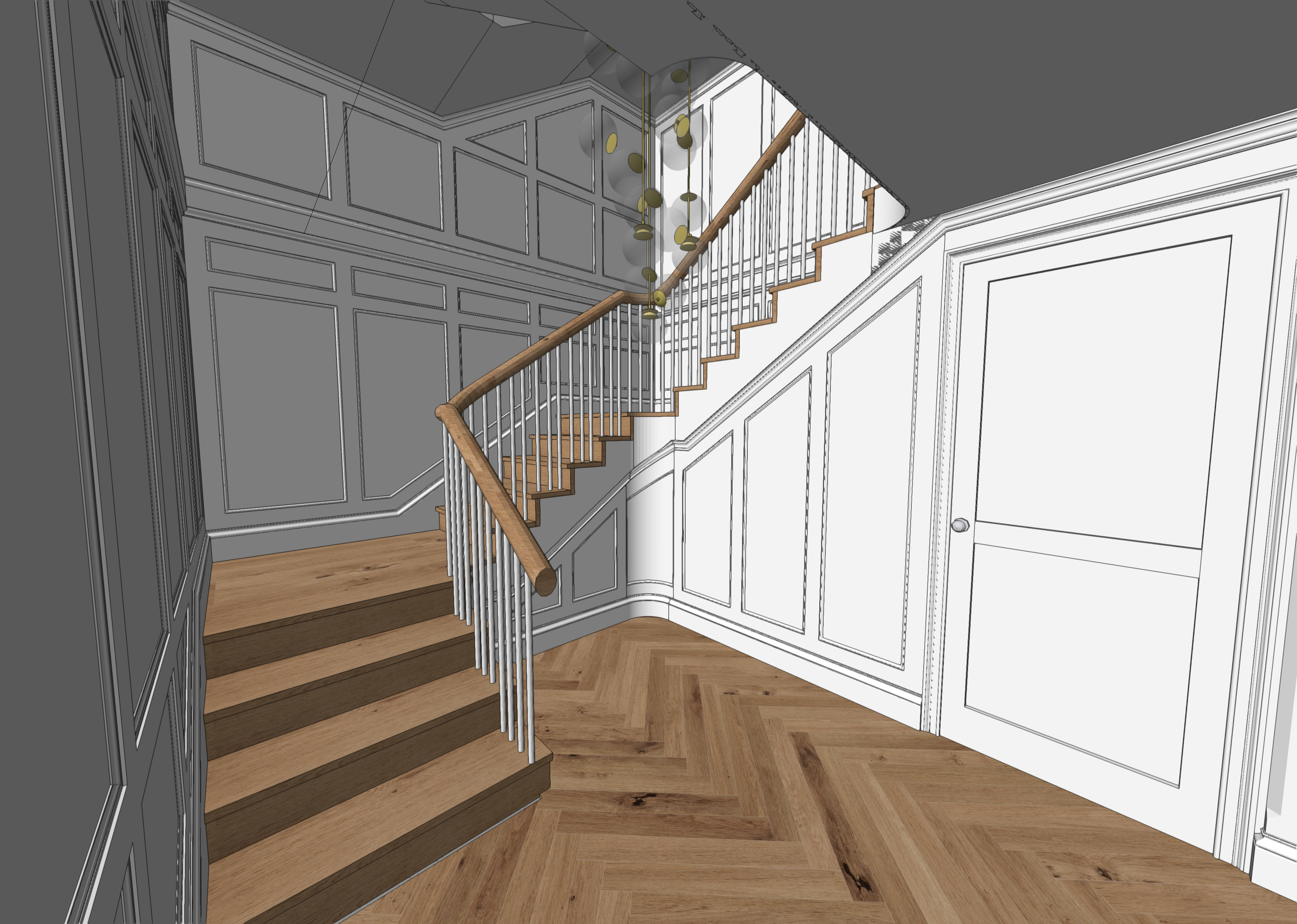
transform the supplied architectural design into a traditional hand painted architectural watercolour preserve the building s exact form proportions composition openings materials and decorative details render it as a carefully observed architectural study on lightly textured warm white cold pressed watercolour paper begin with delicate graphite and fine pencil linework allowing some construction marks and lightly drawn edges to remain visible beneath the paint use thin transparent watercolour washes built up gradually in soft layers combine precise drawing around doors windows mouldings and ornament with looser more expressive washes across larger surfaces use a restrained desaturated palette of warm limestone ivory pale beige soft grey muted taupe dusty brown charcoal and subtle blue green accents create depth through gentle tonal variation translucent grey brown shadows and small areas of darker pigment leave portions of the paper showing through as natural highlights include authentic watercolour qualities such as visible paper grain pigment granulation soft colour blooms slight variations in wash density dry brush texture and a mixture of crisp and softened edges architectural ornament should feel finely drawn and carefully studied without becoming mechanically perfect allow a few edges and secondary details to fade or remain lightly unfinished the final image should feel elegant quiet and tactile like an original architectural illustration painted by hand in a classical sketchbook it must look genuinely analogue rather than digitally filtered show only the completed artwork do not include hands brushes tools palettes text labels signatures borders or studio surroundings avoid photorealism glossy surfaces saturated colours heavy ink outlines perfectly uniform fills cartoon effects and obvious computer generated textures